
Graham Coxon Returns Home on Castle Park

Updated: Jun 23


Jade Read
Editor-in-Chief
June 23, 2026
Colchester was never Liverpool. It wasn't London, either. The Essex town sat just outside the gravitational pull of Britain's biggest music cities, far from the clubs, labels, and headlines at the center of the country's cultural explosion. There were local bands, pub gigs, and community halls, but no major scene on its doorstep. For a young Graham Coxon, that meant looking further afield, picking up influences from London, Manchester, and wherever else great music was being made.
Still, when he wasn't looking elsewhere, he was in Colchester. Long before Blur, before the tours and the records, there was Castle Park, sitting beneath the ruins of the town's Norman castle. It sat in the background of daily life, unchanged while everything around it moved on. Coxon's world would grow far beyond Colchester in the years ahead, taking him from local pubs to number-one records, BRIT Awards, and stages around the world. The park never went anywhere.
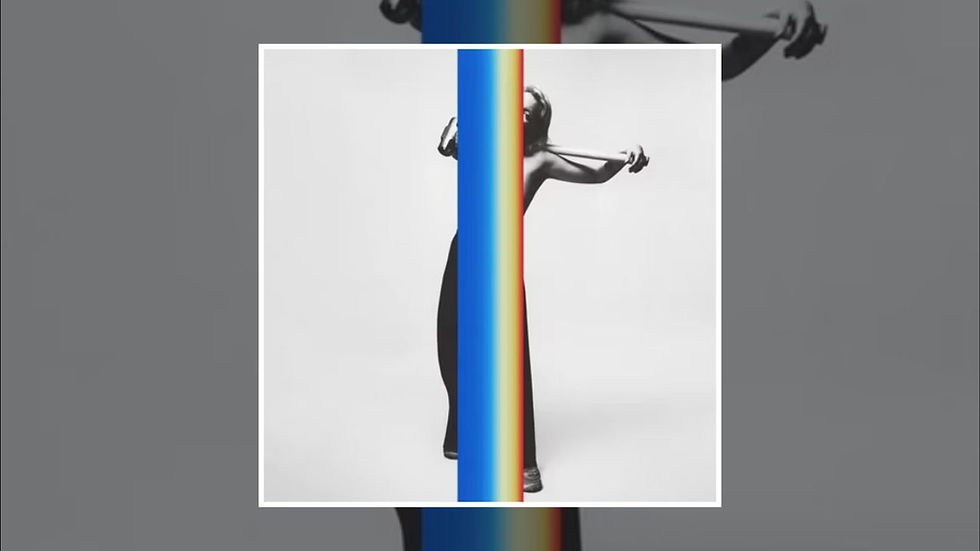
Now, its name sits on the cover of his latest album. The songs themselves date back much further, recorded during the same sessions that produced A+E before spending years on the shelf. Across 10 tracks, those recordings have finally been collected together as Castle Park.
The album opens with "Billy Says," a Kinksy live favorite that has followed Coxon around for years. A regular at solo shows, it became one of those songs fans always thought would end up on an album sooner or later. Opening with it feels like picking up where things left off.
The Kinksy comparisons never seem to go away, and "Alright" does little to stop them. At times, it sounds like something Coxon stumbled across while taking a stroll through Ray Davies' mind. Yet what could have felt like imitation never does. Those eerie corners of '60s pop, with soft harmonies drifting above doo-wop rhythms, aren't heard much anymore. Coxon dusts them off and makes his case for bringing them back.
"When You Find Out" sees Coxon take a step back from trying to reinvent anything at all. Instead, he steps fully into the Merseyside sound, pairing it with a narrative of possessive jealousy reminiscent of songs like The Beatles' "Run For Your Life" and The Rolling Stones' "Under My Thumb."
Fast-forward a few years from that early-'60s sound and "Isn't It Funny" feels like a heavy nod to The Walker Brothers and their enigmatic noir-pop style, showing another side of the music Coxon grew up around.
Those influences come together on "There's a Little House." The call-and-response duet, aided by Lucy Parnell's vocals, brings Coxon's own songwriting into full view. Stripped of the Britpop scale, it shows many of the qualities that made his contributions to Blur so distinctive in the first place.
"Easy" is a ballad built around the acoustic-electric interplay that has become one of Coxon's trademarks. With its distinctive lead guitar work and understated songwriting, it serves as a reminder of his influence not only within Blur but across indie rock more broadly.
Transitioning into what feels like an entirely different sound, "Dripping Soul" is an unconventional western-tinged orchestral piece. It's a track carried more by its instrumentation than anything else, and what it lacks in cohesion with the rest of the album it makes up for in individuality.
As Coxon climbs out of the album's biggest outlier, "Forget Today" combines that adventurous instrumentation with the style that runs through much of the record. With strong hints of early Motown, it shows how naturally Coxon can settle into almost any sound he chooses to explore.
Bringing the impressive instrumentation back for round two, "Melodie Pour Christine," a fully instrumental track, is a reminder of a side of Coxon that rarely gets the attention it deserves. His talent for cinematic composition is on full display, the song sounding equally at home in a Tim Burton film or a forgotten baroque kingdom.
Another track that thrives in that eerie atmosphere is the album closer, "All The Rage." More than anything, it stands out as a production showcase. Longtime collaborator Ben Hillier pushes the sound into new territory, creating a haunting atmosphere where the vocals drift between the instruments like ghosts slipping through cracks in a wall.
As a whole, Castle Park may well be Coxon's finest solo work. It captures an artist at two different points in time at once: the songwriter who recorded these songs nearly two decades ago and the musician releasing them today. In that sense, the album feels fittingly tied to its namesake. After a lifetime spent chasing sounds beyond Colchester, Coxon returns home carrying everything he found along the way.


Comments